
Keyword Research Service Built for Organic Search Growth
TriOrbit Digital’s keyword research service combines seo keyword research, keyword competitor analysis, and structured keyword mapping to give businesses a clear, prioritised picture of what their audience is searching for — and a data-driven plan to rank for it.

Ranking Without a Strategy Is Just Guessing — Here Is Who This Keyword Research Service Is Built For
TriOrbit Digital’s keyword research services are designed for businesses that want every piece of content and every page optimisation to be backed by real search data — not assumptions. Every engagement is built around a structured keyword research strategy that connects keyword discovery, keyword analysis, and keyword mapping into a clear, actionable organic search strategy that informs content for months ahead.
- Business owners who are publishing content regularly but not seeing rankings — because no keyword research analysis has been done to identify what the audience is actually searching for.
- Growing businesses that want a keyword research agency to build a structured keyword targeting plan tied directly to their content calendar and SEO priorities.
- Companies that have started SEO but lack the keyword clustering and keyword mapping architecture needed to build topical authority systematically over time.
- Business owners ready to invest in a keyword research digital marketing foundation that compounds — building organic visibility month over month as content is produced.
Not sure where your keyword gaps are? The strategy call is free and no-pressure — it will identify exactly where keyword research consulting can have the most immediate impact on your organic search strategy.
Why Businesses Without a Keyword Research Strategy Keep Missing Their Audience
Most businesses publish content and optimise pages without a clear picture of what their target audience is actually searching for. Without proper keyword analysis, keyword traffic analysis, or keyword competitor analysis in place, effort gets directed at terms that are either too competitive, too vague, or too disconnected from buyer intent.
The result is a site that keeps producing content but fails to rank — and a marketing budget that burns without building the organic search strategy needed to compound visibility over time.
- Pages are being optimised for the wrong terms — without keyword ranking analysis, there is no way to know whether the right audience is even being targeted.
- Short tail keywords are being chased without keyword competition analysis to determine whether ranking for them is realistic at the current level of site authority.
- No keyword mapping or keyword clustering structure exists to organise content around topical authority — so pages compete against each other instead of reinforcing each other.
- Content marketing keywords are chosen by gut feel rather than through keyword market research — resulting in content that consistently misses what the target audience is searching for.
Fixing this starts with the data — turning guesswork into a prioritised keyword targeting plan where every page is built around real, validated search demand.

Everything Covered in Structured Keyword Research Services for Search Growth
TriOrbit Digital’s keyword research services cover every layer of a thorough keyword discovery and targeting process — from keyword competitor analysis and keyword search trends through to keyword mapping, keyword clustering, and content marketing keyword planning. Every inclusion is designed to translate data into a clear, actionable organic search strategy that feeds directly into the content calendar.
- Comprehensive seo keyword research covering primary, secondary, long tail keywords, and short tail keywords across all target topic areas — supported by industry tools such as SE Ranking, Ahrefs, and SEMrush.
- Keyword competitor analysis and keyword competition analysis — identifying gaps and opportunities competitors have not yet claimed in the search landscape.
- Keyword traffic analysis and keyword search trends mapping to prioritise terms by real demand and realistic ranking potential for the business.
- Keyword discovery and keyword analytics — using sources such as Google Keyword Planner and LowFruits to surface low-competition topics aligned to buyer intent.
- Keyword clustering and keyword mapping to organise discovered terms into coherent topic groups that build topical authority and prevent internal page competition.
- Keyword targeting strategy and keyword ranking strategy — a prioritised plan for which terms to build content around first, and in what order.
- Content marketing keywords identification connecting keyword market research to the content calendar so every article targets a real, validated opportunity.
- Keyword analysis reporting in plain language — clear summaries that explain findings without requiring clients to interpret raw data or spreadsheets themselves.
Every layer feeds the broader SEO marketing system, so each piece of research reinforces the next rather than sitting in an unused spreadsheet.
Search Visibility Gains From a Strategic Keyword Research Approach
When keyword research services are built into the broader search engine optimisation strategy — not treated as a one-time exercise — the results compound. Content targets the right terms from the start. Keyword ranking analysis confirms what is working. Keyword traffic analysis guides what to prioritise next. TriOrbit Digital tracks keyword analytics monthly so every content and optimisation decision is backed by real search data, not assumptions.
- Content that ranks because it is built on structured keyword mapping and keyword targeting aligned to real search demand — not guesswork or gut instinct.
- Reduced wasted effort through keyword competition analysis that filters out unwinnable terms and focuses resources on achievable, high-impact ranking opportunities.
- A coherent organic search strategy built on keyword clustering and topical authority that strengthens every piece of content produced after the research is completed.
- Consistent ranking improvement through a keyword ranking strategy that prioritises long tail keywords first and systematically builds into more competitive short tail keywords over time.
The result is a research foundation that behaves like an asset — one that keeps directing content and optimisation decisions long after the initial analysis is delivered.
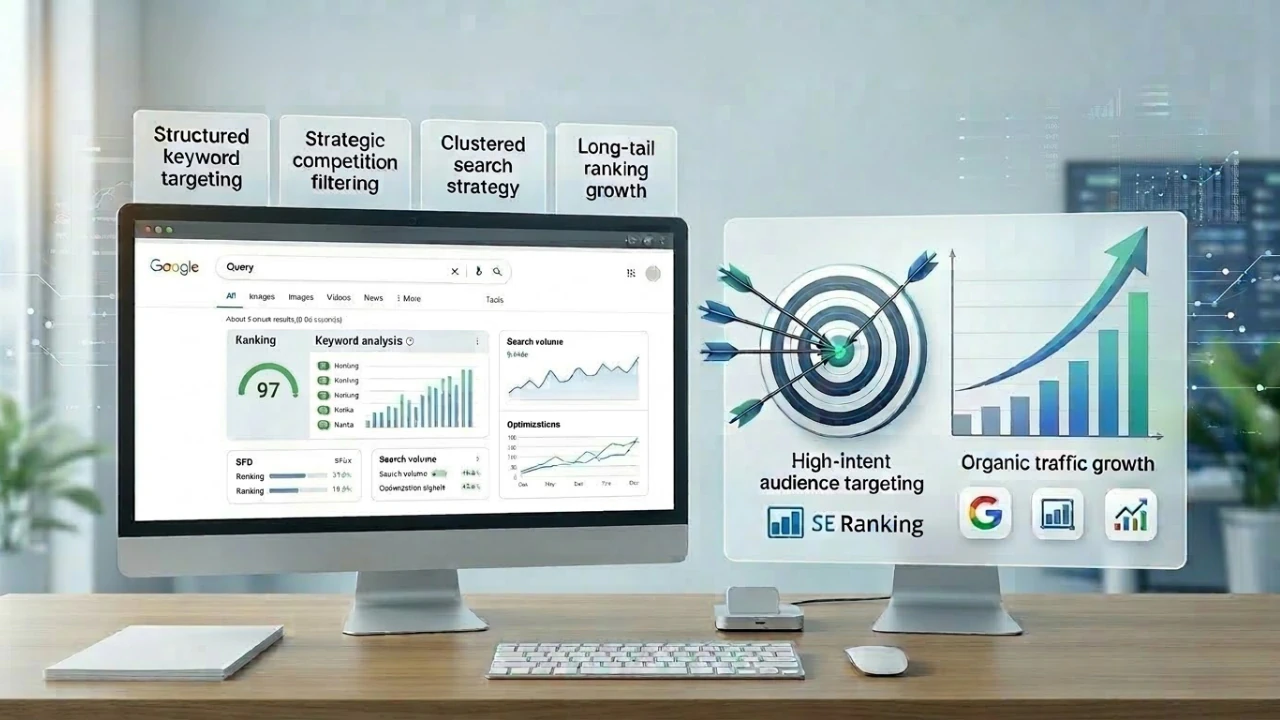
A Proven Framework for Developing a Keyword Research Strategy
Every keyword research service engagement follows a structured four-stage framework — from initial keyword discovery through to a fully mapped, prioritised keyword targeting plan. Each stage builds on the last, ensuring that seo keyword research, keyword competitor analysis, and content planning all connect into one cohesive organic search strategy clients can act on immediately.
Keyword Discovery and Audit
A thorough keyword discovery process identifies all relevant terms across the target topic landscape — using keyword research tools such as LowFruits and Google Keyword Planner to map the full opportunity set before any prioritisation or filtering begins.
Keyword Competitor Analysis
Keyword competitor analysis and keyword competition analysis reveal which terms competitors rank for, where the ranking gaps are, and which keywords represent the clearest path to organic visibility at this stage of a business’s SEO journey.
Keyword Mapping and Clustering
Keyword mapping and keyword clustering organise discovered terms into structured topic groups — creating a clear content architecture that builds topical authority and prevents pages from inadvertently competing against each other in search results.
Strategy and Reporting
A prioritised keyword ranking strategy is documented — covering keyword targeting priorities, content marketing keywords, and keyword traffic analysis — and delivered in plain language so clients can action the findings immediately without needing to interpret raw data.
Structured Keyword Research Built for Action and Clarity
TriOrbit Digital’s keyword research company delivers structured, documented outputs designed to turn research into a clear and actionable keyword strategy — one that informs content, guides optimisation priorities, and supports the broader search engine optimisation strategy for months ahead. Every deliverable is presented in plain language and tied to the agreed business goals.
Exact deliverable scope varies by engagement size and topic complexity — confirmed during the strategy call before any keyword research analysis begins.
Why TriOrbit Digital Is the Right Keyword Research Agency
TriOrbit Digital approaches keyword research services as a foundation for long-term organic growth — not a spreadsheet of search volumes. Every keyword research digital marketing engagement is built around a clear keyword ranking strategy, structured keyword clustering, and a keyword targeting plan that connects research directly to the content calendar and SEO priorities.
Evidence, Not Assumptions
Structured keyword research analysis built on real keyword analytics and keyword search trends — every recommendation is backed by evidence, not assumptions or guesswork.
Plain-Language Documentation
Transparent documentation covers keyword mapping, content marketing keywords, and prioritisation rationale — in plain language clients can actually use and act on immediately.
Organic-First Strategy
An organic-first keyword research strategy designed to build compounding topical authority, not just chase short-term search volume spikes that fade as quickly as they appear.
Scoped Before We Start
Every engagement begins with a scoping conversation before any keyword research tools are deployed — confirming target topics, business goals, and competitive context first.
Stop Guessing — Build Your Keyword Strategy on Real Data
The strategy call is a free, no-pressure conversation about fit, scope, and where keyword research consulting can have the most immediate impact. You walk away with a clear sense of your biggest keyword gaps and what to prioritise first — with no lock-in contracts and no obligation.
Frequently Asked Questions
These are the questions TriOrbit Digital hears most often about keyword research services. Every business has different target topics, competitors, and content goals — so specific recommendations are always tailored to the individual situation. Bring your questions to the strategy call.
What is a keyword research service?
A keyword research service involves systematically identifying and analysing the search terms a target audience uses to find businesses like yours. This covers seo keyword research, keyword competitor analysis, keyword traffic analysis, and keyword mapping — resulting in a structured, prioritised plan that informs content creation, page optimisation, and the broader organic search strategy.
Why is keyword research important for SEO?
Keyword research is the foundation of every effective search engine optimisation strategy. Without it, content and optimisation effort gets directed at terms that may be too competitive, too vague, or disconnected from buyer intent. Structured seo keyword research ensures that every page is built around real search demand — maximising the return from every piece of content published.
What is keyword mapping and why does it matter?
Keyword mapping assigns specific keyword targets to individual pages across the site — preventing internal competition and ensuring the content architecture supports topical authority. Without it, even strong keyword research analysis fails to translate into rankings because pages pull against each other rather than reinforcing the overall organic search strategy built on the research.
What are long tail keywords and should I target them?
Long tail keywords are specific, lower-competition search phrases that typically indicate stronger buyer intent. They are harder to find without structured keyword discovery and keyword analytics, but they are often far easier to rank for than short tail keywords — and they convert at a higher rate because they attract visitors who are closer to making a real decision.
What is keyword competitor analysis?
Keyword competitor analysis identifies which keywords competitors rank for, how difficult those terms are to compete for, and where exploitable gaps exist. Combined with keyword competition analysis, this reveals the clearest path to organic visibility — especially for businesses that cannot yet compete for high-volume, highly contested terms at the current stage of authority.
How often should keyword research be updated?
Keyword search trends and search demand shift over time as audience behaviour, competition, and algorithm priorities evolve. TriOrbit Digital recommends reviewing and updating keyword analytics at least quarterly, with monthly keyword ranking analysis to track movement and identify new content opportunities as the search landscape continues to change.
What is the difference between short tail and long tail keywords?
Short tail keywords are broad, high-volume terms that are generally very competitive and take significant authority to rank for. Long tail keywords are more specific, lower in volume, and reflect clearer intent — making them far more achievable for most businesses. A balanced keyword ranking strategy targets both, building with long tail keywords first and growing into short tail keywords as authority compounds over time.
What keyword research tools does TriOrbit Digital use?
TriOrbit Digital uses industry-leading keyword research tools — including SE Ranking, Ahrefs, SEMrush, Google Keyword Planner, and LowFruits — to cover keyword discovery, keyword traffic analysis, keyword competitor analysis, and keyword ranking analysis. Specific tools vary by engagement scope and are discussed during the strategy call; the focus is always on actionable keyword analytics clients can understand, not raw data exports that require interpretation.
What is keyword clustering and how does it improve content strategy?
Keyword clustering groups related keywords into thematic topic groups — allowing each page to target a cluster of semantically related terms rather than just one keyword. This improves topical authority, supports content marketing keywords planning, and creates a logical site architecture search engines can interpret accurately. It is one of the most impactful outputs of a structured keyword research strategy.
Can keyword research consulting help if I already have some SEO in place?
Yes. Keyword research consulting adds significant value even when SEO is already underway — surfacing missed keyword market research opportunities, identifying terms existing content ranks for but does not optimise, and filling gaps in keyword mapping and keyword targeting. A fresh keyword analysis often reveals that meaningful traffic is already within reach but is being left on the table.